
Why a Property Survey Belongs in Your Pre-Closing Checklist
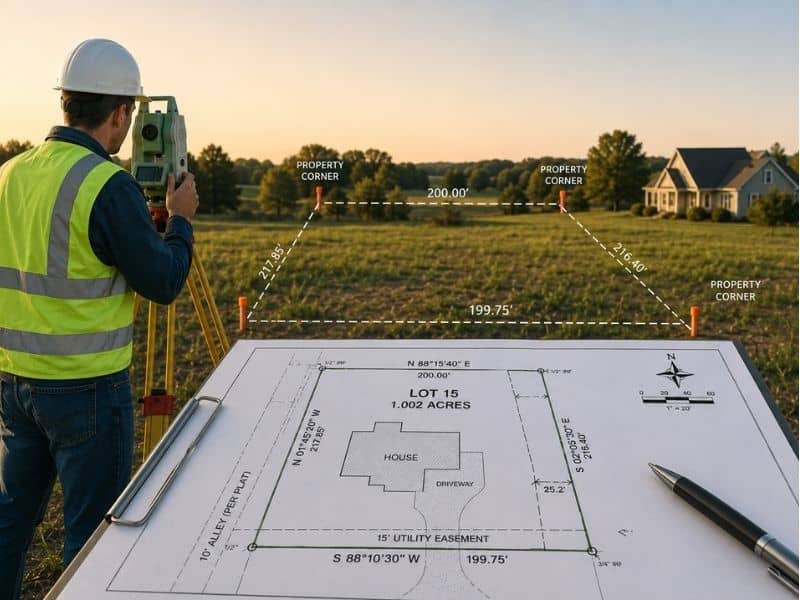
A property survey is one of the most useful documents a buyer can have before signing the final papers. Most buyers focus on the inspection report and the title commitment during closing preparation. The survey belongs on that same list. It shows what the property actually looks like on the ground, how the lot is shaped, and whether anything about the land raises a question worth asking before the deal is done. Getting a look at the survey before closing, not after, puts buyers in a much better position.
How a Property Survey Can Show If the Land Matches the Records
A property listing describes the lot in general terms. The legal records describe it in specific ones. A survey is what connects those two things to the actual ground. It shows whether what a buyer sees during a site visit matches what the deed and legal description actually say about the property.
Sometimes they match perfectly. Other times there are small differences. A lot described as rectangular in the deed may have a slight jog along one boundary that the listing never mentions. A property described as backing up to open land may show a recorded right-of-way running along the rear line. These details don’t always change a buyer’s decision, but they deserve to be known before closing, not discovered afterward. A survey makes that comparison possible.
Why a Property Survey Can Reveal Shared Areas
Some properties share more than a fence line with the neighbors. A driveway used by two households may have been informally shared for years with nothing in writing behind it. A walking path along the side of a lot may connect to a neighboring property in a way the listing never mentions. An alley behind the property may give others a right to cross part of the lot.
These shared arrangements don’t disappear at closing. A buyer who takes ownership without knowing about them inherits whatever the current situation is, formal or not. A survey puts these features on a drawing so a buyer can see them clearly and ask the right questions before signing. Whether a shared area has a recorded legal basis or not is an important thing to know before the transaction is complete.
How a Property Survey Helps You Know the Shape and Size of the Lot
Lot size is listed in most property listings, but the shape of the lot often gets little attention. Shape matters more than buyers realize. A one-acre lot that is long and narrow gives a very different amount of usable space than a one-acre lot that is roughly square. A flag lot, which has a thin strip of land connecting to the road and a wider section behind it, looks deceptively large on paper but has real limits on how it can be used.
A survey shows the exact dimensions and shape of the lot based on field measurements. A buyer who reviews that drawing before closing knows exactly what they’re getting, not just in total size but in how the land is laid out. That information helps set realistic expectations about yard space, setbacks, and what fits where.
Why a Property Survey Can Answer Important Questions Before Closing
A lot of closing questions get harder to answer after the papers are signed. A survey gives buyers, attorneys, and title companies documented information to work from while the deal is still open and options still exist.
If the survey shows a feature close to the property line, a buyer can ask about it. If it shows a shared access arrangement with no recorded easement behind it, a title company can check the records and give a clear answer. If it shows the lot dimensions are slightly different from what the listing states, that discrepancy can be addressed before anyone commits. The survey doesn’t create these questions. It just brings them to the surface at a time when they’re still manageable.
How a Property Survey Can Help With Plans After You Move In
A survey doesn’t stop being useful after closing. Once a buyer becomes an owner, the survey becomes a reference document they can return to whenever a project or question comes up.
Planning a fence? The survey shows where the property line sits so the fence goes in the right spot. Thinking about adding a shed or extending a patio? The survey shows how much room exists between the planned structure and the boundary. Wondering whether a neighbor’s new planting sits on your side of the line? The survey gives a documented reference to check against. Keeping the survey on file after closing means a homeowner has accurate, licensed information ready whenever the land comes up, which it almost always does at some point.
Frequently Asked Questions
Can a property survey show if the lot size is correct?
Yes. A property survey provides measurements based on field work and recorded legal documents. Those measurements show the actual dimensions of the lot, which a buyer can compare against what the listing or deed describes.
Does a property survey show shared driveways or paths?
Yes. A survey shows physical features on and near the property, including driveways, paths, and other areas that may be used by more than one property. Whether those shared arrangements have a recorded legal basis is a question the survey helps raise before closing.
Why do lenders and title companies look at a property survey?
Lenders use a survey to confirm that the property being financed matches its legal description and that improvements sit within the recorded boundaries. Title companies use it to identify conditions that may need to be addressed before coverage can be issued.
Can a property survey help with future home projects?
Yes. A survey shows where the property line sits, how the lot is shaped, and how much space exists near the boundary. That information helps owners plan fences, additions, and other improvements based on accurate measurements rather than estimates.
Should I review a property survey before closing?
Reviewing the survey before closing gives buyers a chance to understand what the property actually looks like on the ground and to ask questions while the deal is still in progress. Issues that surface before signing are much easier to address than ones discovered after.