
When You Need an Elevation Certificate and What It Tells You About Flood Risk
If you own a property in a flood-prone area, understanding your flood risk is essential. An Elevation Certificate can be a key tool in this process, providing vital information about your property’s elevation and flood zone status. You might need this certificate at various stages, such as prior to closing on a home or during renovations. But how exactly does it impact your insurance and risk management strategies? Let’s explore further.
How Elevation Certificates Help You Manage Flood Risk
Elevation Certificates are invaluable tools for homeowners in flood-prone areas, helping you understand and manage your flood risk effectively.
By providing an accurate elevation of your property in relation to the base flood elevation, these certificates play a crucial role in floodplain management. You can use this information to assess your specific risk level and make informed decisions about insurance and development options.
Knowing where your home stands within the floodplain allows you to gauge potential impacts from flooding, enhancing your risk assessment. Armed with this knowledge, you can implement mitigation measures, like elevating your home or opting for flood insurance, ultimately reducing the financial impact of a flood event.
You’ll feel more secure when you’re prepared and proactive.
What an Elevation Certificate Includes
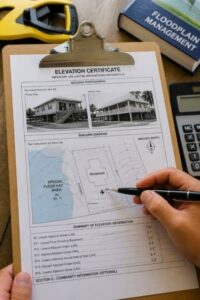 An Elevation Certificate includes crucial details that help you understand your property’s flood risk. It provides essential elevation data that can influence insurance premiums and flood zone determinations.
Here’s what you can expect to find:
- Building location – Exact geographical coordinates of your property.
- Elevation information – Heights of the lowest floor and the floodplain elevation.
- Flood zone designation – Identifies your property’s placement in flood mapping.
- Structural details – Information about the building’s design, like foundation type.
Understanding these elements not only helps prepare for potential flooding but also ensures you’re well-informed when interacting with insurance providers and local regulations.
Knowing this data helps you make better decisions regarding flood risk management.
When to Get an Elevation Certificate for Your Property?
Wondering when you should get an Elevation Certificate for your property? It’s crucial during property assessments and if you’re in a designated flood zone. You’ll need one when applying for flood insurance or when building, renovating, or improving your home. Here’s a quick guide to help you decide:
| Situation | When to Get an Elevation Certificate |
|---|---|
| Buying a new home | Before closing on the property |
| Renovating or building | Prior to construction |
| Applying for flood insurance | During application |
| Required by lender | As part of the mortgage process |
| Local government request | When needing compliance with floodplain regulations |
Having this certificate in hand will help you understand your flood risk and make informed decisions.
The Impact of Elevation on Insurance Premiums
Your property’s elevation can significantly influence your insurance premiums.
Understanding your flood zone designation and ensuring your elevation is accurately reported can lead to potential premium discounts.
Understanding Flood Zone Designations
Understanding flood zone designations is crucial, especially when it comes to how elevation affects insurance premiums. Different flood zone types influence your risk and costs. Here’s what you need to know:
- Zone A: High-risk areas where flood insurance is usually required.
- Zone B: Moderate-risk zones, often facing lower premiums.
- Zone C: Minimal flood risk, which can lead to significantly reduced insurance rates.
- Coastal Zones: Specific zoning regulations apply, enhancing importance for elevated properties.
Your home’s elevation can keep you from high-risk classifications.
When you navigate these flood zones accurately, you’re not only complying with zoning regulations but also potentially saving on your insurance premiums. Understanding these designations makes a real difference in your financial planning.
Importance of Accurate Elevation
Accurate elevation measurements can significantly influence your flood insurance premiums. When your home’s elevation is assessed against floodplain mapping, it directly impacts your risk assessment and potential costs. A higher elevation typically results in lower premiums, while properties situated closer to the base flood level might face steeper rates.
Here’s a breakdown of how elevation can affect your insurance premiums:
| Elevation Level | Risk Category | Premium Impact |
|---|---|---|
| Above Base Flood | Low Risk | Reduced Premiums |
| At Base Flood | Moderate Risk | Standard Premiums |
| Below Base Flood | High Risk | Increased Premiums |
| Compliance | Varies | Potential Discounts |
| Non-Compliance | High Risk | Maximum Premiums |
Understanding these dynamics can help you make informed decisions about your insurance.
Premium Discounts for Compliance
Compliance with elevation standards can lead to significant premium discounts on flood insurance. When you ensure your property meets these criteria, you unlock several compliance benefits that can reduce your overall costs.
Here are four key points to consider:
- Lower Rates: Elevation compliance often results in lower insurance rates.
- Increased Premium Qualifications: Meeting standards helps you qualify for various premium discounts.
- Risk Mitigation: A well-elevated property indicates a lower flood risk, further impacting premium costs.
- Potential Savings: You might save thousands over the life of your policy by adhering to elevation requirements.
Taking advantage of compliance benefits not only gives you peace of mind but also improves your financial situation when it comes to flood insurance.
Mitigation Strategies From an Elevation Certificate
While you may not think about it often, an Elevation Certificate plays a crucial role in identifying and managing flood risk for your property. This document helps you understand your property’s elevation in relation to the base flood elevation, allowing you to conduct a thorough risk assessment.
By knowing this information, you can implement effective floodproofing techniques tailored to your situation. For instance, elevating your home on piers or using flood-resistant materials can significantly reduce the risk of flood damage. Additionally, you might consider installing sump pumps or backflow valves to further mitigate potential water intrusion.
Ultimately, an Elevation Certificate empowers you to make informed decisions, protecting your investment from the devastating impacts of flooding.
Who Can Help You Get an Elevation Certificate?
When you’re ready to get your Elevation Certificate, several professionals can assist you.
Licensed surveyors and engineers play key roles, and your local building department can guide the process.
Don’t forget your insurance agent, who can provide valuable insights tailored to your specific flood risk.
Licensed Surveyors and Engineers
Finding the right licensed surveyor or engineer can make all the difference in obtaining an Elevation Certificate for your property.
You’ll want someone who understands land surveying and adheres to engineering standards. Here’s how to choose the right professional:
- Check Credentials: Ensure they’re licensed and experienced in elevation surveys.
- Experience with Flood Zones: Look for someone who’s worked specifically with flood risk assessments.
- Reputation: Read reviews or ask for referrals to gauge their reliability.
- Communication: Choose someone who communicates clearly and keeps you informed throughout the process.
Local Building Departments
Local building departments play a crucial role in helping you secure an Elevation Certificate for your property, as they have the resources and knowledge to guide you through the process. They understand local regulations and can provide vital information regarding building permits needed for your project.
Here’s a quick overview of what you might gain from working with them:
| Service | Role | Benefits |
|---|---|---|
| Guidance on Process | Assist with documentation | Streamlined application |
| Understanding Codes | Explain local regulations | Compliance assurance |
| Permit Requirements | Detail necessary permits | Avoid delays in your project |
| Local Knowledge | Advise on elevation specifics | Accurate assessments of flood risk |
Insurance Agents Assistance
While working on your Elevation Certificate, insurance agents can be invaluable allies in navigating the complexities of flood insurance requirements. They can help you with:
- Understanding your insurance policy: Agents explain the ins and outs of coverage related to flood risks.
- Conducting a risk assessment: They’ll evaluate your property’s potential flood exposure based on the certificate data.
- Finding qualified surveyors: Agents often have a network of professionals who can provide your Elevation Certificate efficiently.
- Assistance with claims: Should the need arise, they can guide you through the claims process tied to flood insurance.
Frequently Asked Questions
How Much Does an Elevation Certificate Typically Cost?
An elevation certificate typically costs between $300 to $800, depending on factors like location and complexity. Be aware of elevation survey requirements, as they can influence elevation certificate pricing in your area.
Are Elevation Certificates Required for All Properties?
No, elevation certificates aren’t required for all properties. However, if you’re seeking flood insurance or need property assessments, having one can significantly help determine your flood risk and might be necessary in certain scenarios.
How Often Should an Elevation Certificate Be Updated?
You should update your elevation certificate every few years or whenever significant changes occur. Follow frequency recommendations and updating procedures from local authorities to ensure your property’s flood risk assessment remains accurate and reliable.
Can I Use Old Elevation Certificates for New Insurance Policies?
You can use old elevation certificates for new insurance policies, but be cautious. Flood insurance implications may arise if the data is outdated, potentially affecting your coverage. Updating ensures accurate representation of your property’s flood risk.
What if My Property Is Not in a Flood Zone?
If your property’s not in a flood zone, you might not need specific flood insurance, but verify your insurance requirements. Some lenders still require coverage regardless of flood zone status, so check your policy.