
Construction Staking Survey Mistakes That Can Throw Off a Build
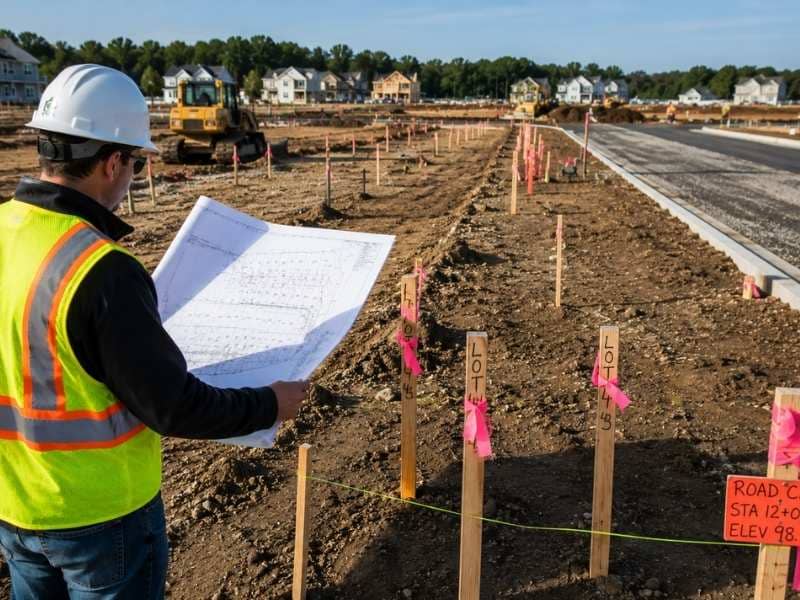
A construction staking survey sets the physical points a crew builds from. It marks where a foundation, road, or utility line should sit. This happens before any work begins. On one home site, a staking mistake is bad enough. On a new subdivision, the same mistake can repeat across many lots at once. Catching these errors early keeps a project on time and on budget.
Staking Multiple Lots at Once: Where Subdivision Layouts Go Wrong
A subdivision often gets staked in one large pass. Crews do not always work lot by lot. They move fast across dozens of parcels using the same plan set and the same control points. That speed leaves room for a stake meant for one lot to end up on the lot next door. A pad elevation can also get applied to the wrong parcel during a busy staking run.
These mix-ups rarely show up right away. A foundation crew often trusts the stakes already in the ground. They do not always question which lot the stakes belong to. By the time someone notices the error, concrete may already be poured. A quick lot by lot check against the plat can catch this problem early.
When a Later Grading Pass Outdates an Earlier Stake
Large subdivisions rarely get graded in one pass. Earthwork often happens in waves. Roads, utilities, and single lots get finished at different times. A stake set before a second grading pass can leave a structure built off elevations that no longer match the ground.
This becomes a real problem when crews trust an old stake without checking it. Ground that gets cut or filled after staking changes the reference point completely. Builders need to confirm which grading pass a stake belongs to. A short check before pouring can save a costly fix later.
Reading Stakes Across Different Construction Phases on the Same Lot
One lot can carry several sets of stakes over time. Rough grade stakes go in first. Utility stakes follow. Final building corner stakes come last. Each set often goes in weeks or months apart.
A crew working fast can grab the wrong set of stakes by mistake. Using a utility stake to set a foundation corner creates a real placement error. Clear labeling helps crews avoid this mix-up. Surveyors often color code or tag stakes by phase so crews can tell them apart.
Utility and Roadway Staking Errors That Spread Across Several Lots
Some staking work covers infrastructure that runs through more than one lot. A road, storm drain line, or shared utility trench often crosses several parcels at once. A staking error in that shared infrastructure does not stay on one lot.
If a roadway stake sits off by even a few feet, every lot along that road can end up with a setback problem. The same goes for a utility line staked at the wrong depth. These mistakes touch many parcels, so they tend to cost more to fix than a single lot error. Catching them early protects the whole phase of the project.
Why Catching a Staking Error Gets Harder as a Subdivision Fills In
Early in a subdivision, an open lot makes a staking problem easy to spot. A surveyor can walk the site and check stakes against the plan with nothing in the way. That changes once driveways, foundations, and landscaping start filling in.
Later phase lots often sit boxed in by finished work nearby. This makes a check survey harder to run cleanly. A mistake that would take minutes to catch early on can take much longer to sort out once construction crowds the site. This is one reason builders check stakes in the first lots of a phase before the rest of the subdivision catches up.
Frequently Asked Questions
Why are staking mistakes more likely across a multi-lot subdivision than on a single home site?
Staking dozens of lots in one pass raises the odds of mixing up a stake, elevation, or lot reference. A crew working fast across many parcels has more chances for one lot’s information to land on another. This risk grows as the number of lots staked at once goes up.
How does a later grading change affect stakes that are already in the ground?
A grading pass that happens after stakes are set can leave the staked elevation out of sync with the new ground. This gap grows wider when phases are spaced weeks apart. Builders should check that a stake reflects the most recent grading before trusting it.
Can a staking error on one lot affect the lots next to it?
Yes, when the error involves shared infrastructure like a road or utility line. A mistake in that shared staking can carry into every lot the infrastructure touches. This makes shared infrastructure errors more costly than mistakes on a single lot.
How do crews tell which stakes belong to which construction phase?
Surveyors often use labels, tags, or color codes to separate rough grade, utility, and final layout stakes. This system helps crews confirm they are using the right stake for the work in front of them. Problems tend to show up when that labeling system breaks down on a busy site.
What should a builder do if staked elevations look inconsistent across a subdivision?
Inconsistent elevations are a sign to run a check survey against the original control points before continuing. This step shows whether the issue comes from a staking error or a grading change. Pausing work on the affected lots until the check survey is done stops a small error from becoming a bigger one.