
Property Line Markers That Homeowners Frequently Misidentify
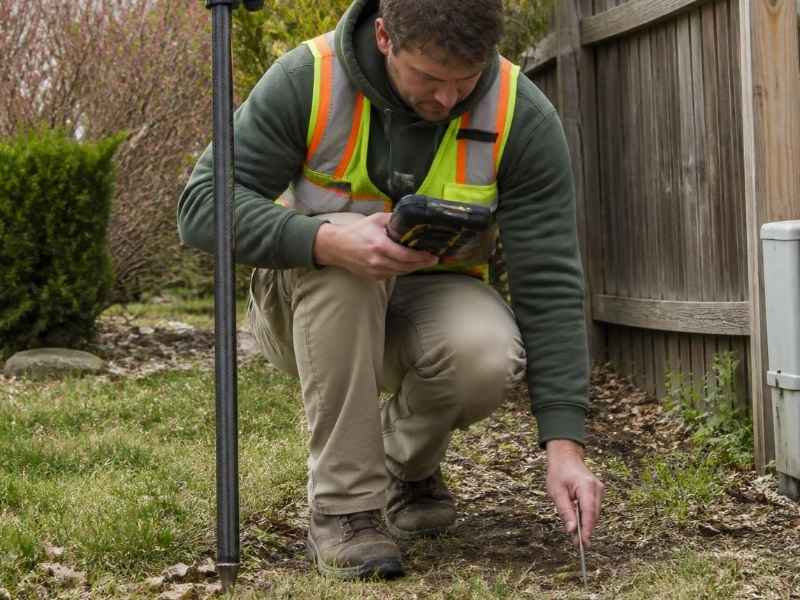
You spot a metal pin near the edge of your yard. You assume it marks your line. Then you build a fence, and a neighbor says you’re two feet over. This happens more than people think. Property line markers are easy to misread, and a wrong guess can cost you money, time, and goodwill. The good news is simple. Once you know what a real marker looks like, and what it does not, you can avoid a costly mistake.
What Actually Qualifies as a Property Line Marker
A property line marker is a physical object a surveyor sets or finds to show a boundary corner. It is not just any stake or post in the ground. The object has to tie back to a recorded survey, a plat, or a deed. Without that link, it is only an object in the dirt.
Surveyors look at many kinds of physical evidence. Some of it marks a boundary. A lot of it does not. The trick is knowing the difference before you act on it.
Here are common items surveyors evaluate:
- Iron pins or rebar driven at corners
- Iron pipes from older surveys
- Concrete monuments with a cap or disk
- Nails or spikes set in pavement
- Chiseled marks on curbs or walls
Seeing one of these does not settle your line by itself. A surveyor still has to confirm it. Appearance alone is never proof. That is the point most homeowners miss.
Fence Posts, Stakes, and Other Misleading Features
Fences fool people all the time. A fence looks like a clear edge, so folks treat it as the property line. But most fences are not built on the line. They get placed a bit inside it, or a bit over it, by whoever installed them.
The person who built that fence may have guessed. They may have followed an old fence. They may have just eyeballed it. None of that makes the fence a legal boundary. A fence shows where someone chose to build, not where the line truly runs.
Wood stakes cause the same trouble. Builders, landscapers, and utility crews all set stakes for their own work. A stake could mark a sprinkler run, a tree spot, or a grading point. It rarely marks a corner.
Watch out for these misleading features:
- Fence posts and fence lines
- Wood stakes with flagging tape
- Landscaping timbers or garden edging
- Old tree lines or hedgerows
- Driveways and retaining walls
In places where many neighborhoods have grown and changed over the years, old fences and new ones often sit side by side. That makes visual guesses even riskier. If you plan to build, do not trust the fence. Confirm the line first.
Pins, Pipes, and Monuments Found Near Property Corners
Metal pins, iron pipes, and concrete monuments are the objects most likely to be real markers. But even these need proper checking. A pin near your corner might be your corner. It might also belong to a different survey, or it might have been moved.
Metal pins are the most common marker in local subdivisions. A surveyor sets them at corners and records their location. Over time, mowers, cars, and digging can shift or bury them. A pin you dig up may sit inches from where it started.
Iron pipes often come from older surveys. Some are decades old. They can rust, bend, or get hit during construction. An old pipe can still be valid, but it needs to be tied back to the record before anyone relies on it.
Concrete monuments usually mark larger tracts, subdivision corners, or control points. They look official, and often they are. Still, a monument can be set for a purpose that does not match your lot corner. Do not assume it marks your line.
The lesson holds for all three. The object may be a true property line marker. It may also be misplaced or unrelated. Only a licensed surveyor can confirm which.
Why a Property Line Marker May Not Match the Expected Location
Sometimes a marker sits right where you expected. Sometimes it sits several feet off. That gap surprises people, but there are real reasons for it.
Markers get disturbed. A pin can be knocked loose by heavy equipment. Grading, paving, and utility work all move soil and metal. A marker that looks solid may have shifted years ago.
Old surveys also play a part. Land in Madison County has been surveyed many times over many decades. Older methods and older tools produced different results than modern GPS work. A pin from a 1970s survey may not match a new measurement.
Construction adds more confusion. When homes, driveways, and fences go up, crews sometimes pull or bury markers. A later owner then finds nothing, or finds the wrong thing. Conflicting evidence is common on lots that have changed hands often.
Here is what can throw a marker off:
- Disturbance from digging, mowing, or paving
- Older surveys using different measurements
- Markers moved during past construction
- Two markers near one corner that disagree
- Missing markers that were never replaced
When evidence conflicts, guessing is dangerous. A surveyor sorts it out with more than a tape measure.
How Surveyors Verify Boundary Evidence Before Marking a Line
A surveyor does not rely on one object. They gather many sources and weigh them together. Field evidence is only part of the picture. Records fill in the rest.
Before setting or confirming a line, a surveyor reviews the deed and the recorded plat. These describe the lot in legal terms. The surveyor then compares those documents to what is actually in the ground.
Next comes measurement. Using modern equipment, the surveyor measures distances and angles from known points. They check found markers against the record. If a pin matches, it supports the line. If it does not, they dig deeper.
The process usually includes:
- Reading the deed and plat
- Researching past surveys and county records
- Locating and testing found markers
- Taking precise field measurements
- Comparing all evidence before deciding
This is why a property line marker cannot be judged by looks alone. The surveyor’s job is to reconcile everything. Field evidence, plats, deeds, and measurements all have to agree before a line is marked with confidence. Boundary rules and evidence weight can vary by lot, subdivision, county, and project, so confirm your line early if a fence, permit, or closing depends on it.
Frequently Asked Questions
How do I find the property line markers on my lot?
Start with your plat or deed, which shows corner locations. Then check the corners of your lot for pins or pipes near the surface. A metal detector can help since many markers are metal. If you cannot find them or they do not match the plat, a surveyor can locate and confirm the true corners.
Is a fence a reliable property line marker?
No. Fences are often built inside or over the real line. The person who set the fence may have guessed or followed an older fence. A fence shows where someone built, not where your boundary legally runs. Only a survey confirms the line.
Can I move or replace a property line marker myself?
You should not. Disturbing a marker can create disputes and, in many areas, may carry penalties. If a marker is damaged or missing, hire a licensed surveyor to reset it. They tie the new marker to the recorded survey so it holds up.
Why don’t my markers match my measurements?
Markers can be disturbed, buried, or set by an older survey with different methods. Construction and yard work also move them over time. When the ground and the record disagree, a surveyor researches both to find the correct location. Guessing on your own is risky.
Do I need a survey if I can see my markers?
Seeing a marker is not the same as confirming it. The object may be misplaced or belong to another survey. If you plan to build, sell, or resolve a dispute, a survey verifies the marker against the record. That protects you before you spend money.
